
Weaponising Hate in the 2027 Nigerian Election
The 2027 Election: Competition Must Not Become Conflict
As Nigeria approaches the 2027 general elections, the intensity of political competition is increasing, bringing with it the familiar temptation to deploy every available tool in the pursuit of electoral advantage. The danger is that political competition could cease to be about persuading citizens and become an exercise in mobilising them against one another. Nigeria’s ethnic, religious and regional diversity is an enduring feature of our national identity; it should not become political ammunition to be exploited for electoral gain. Desperate politicians and their allies may seek to magnify existing grievances, manufacture distrust and turn legitimate differences into sources of fear and hostility. Nigerians must therefore not allow the pursuit of political power to weaponize the very differences that make up our national fabric, nor allow ourselves to become pawns in a political contest whose consequences we will ultimately have to live with together.
What Does It Mean to Weaponize Hate?
The weaponization of hate in politics must be distinguished from strong political opinions and legitimate criticism of political opponents. Not every harsh political statement constitutes hate speech, and the legitimate contestation of ideas should not be mistaken for incitement. A healthy democracy depends on the freedom to criticise political leaders, challenge government policies, expose failures and disagree robustly with opposing political positions. Campaigning and political persuasion are also legitimate democratic activities. Candidates and political parties are entitled to present their records, promote their programmes, appeal to voters and argue forcefully that their visions are preferable to those of their opponents.
The line is crossed when political actors move from challenging ideas and political choices to attacking the identity, dignity or safety of an identifiable group. Hate is weaponised when political actors deliberately manufacture fear, resentment or hostility and direct it towards an identifiable ethnic, religious, regional or social group for political advantage. This can take the form of portraying an ethnic, religious, regional or social group as a threat to the interests, security or future of another. At that point, citizens are no longer being persuaded to support a candidate because of what that candidate represents; they are being mobilised against another group because of who they are.
This distinction is critical as Nigeria approaches 2027. Political disagreement should be vigorous, criticism should be fearless, campaigning should be competitive. But none of these requires the demonisation of another community. When political actors exploit identity, grievance and fear to secure electoral advantage, they risk transforming ordinary political competition into social hostility, with consequences that may endure long after the election itself has ended.
Why Desperate Politicians Resort to Hate
When politicians cannot secure support through a convincing record, credible policies or a compelling vision for the future, there can be a temptation to redefine the election as a struggle between “us” and “them”, mobilising ethnic, religious or regional identities to create fear, resentment and political loyalty. History offers sobering warnings. According to a UN Report on Hate Speech, in Rwanda, decades of politically exploited ethnic divisions contributed to the 1994 genocide against the Tutsi. In a recent incident, the Government of Rwanda condemned the Uganda Army Chief, Muhoozi Kainerugaba, over social media posts about Hutu and Tutsi identities, calling the remarks ‘ethnic extremism’, warning that such comments threaten efforts to maintain unity after the 1994 genocide. In Kenya, inflammatory ethnic rhetoric surrounding the 2007 elections contributed to violence in which more than 1,100 people were killed and over 600,000 displaced.
In Nigeria’s 2015 election cycle, then Katsina State Governor Ibrahim Shema referred to political opponents as “cockroaches” and urged supporters to “crush” them. This is a case of political rhetoric that transformed opponents from legitimate political competitors into dehumanised enemies. Channels Television simultaneously reported that the 2015 Lagos governorship campaign also produced explicitly ethnicised rhetoric involving the Oba of Lagos, Rilwan Akiolu, who was widely reported as warning Igbo residents over their electoral choice, prompting controversy and a subsequent clarification from the palace.
The danger is not confined to Africa. In Bosnia and Herzegovina, nationalist propaganda that demonised ethnic communities accompanied a conflict that claimed more than 100,000 lives, while in Myanmar, hate propaganda and misinformation targeting the Rohingya were linked to grave human rights violations and the displacement of more than 725,000 people. These experiences demonstrate that the consequences of weaponizing hate during elections can outlive the politicians who deploy it. A politician may win an election by exploiting division, but a divided society is the price citizens are left to pay.
From Identity Politics to the Weaponisation of Identity
Ethnicity, religion and regional identity are not inherently threats to Nigeria’s democracy; they are legitimate dimensions of our social reality and important sources of community, belonging and political expression. Indeed, Nigerians have every right to organise, advocate and participate in politics around issues that matter to their communities. The danger begins when political actors deliberately transform these identities from expressions of belonging into political fault lines, and from political identities into instruments of fear and exclusion.
The process is often gradual. Seemingly harmless political messaging usually evolves from mere difference to stereotyping. Then from stereotyping to suspicion, from suspicion to demonisation, and ultimately from demonisation to hostility and mobilisation against an “other.” A community that once represented simply a different political constituency can progressively be portrayed as a threat, and a contest for votes can be reframed as a struggle for the survival of one group against another. This is where identity ceases to be merely political and becomes weaponised.
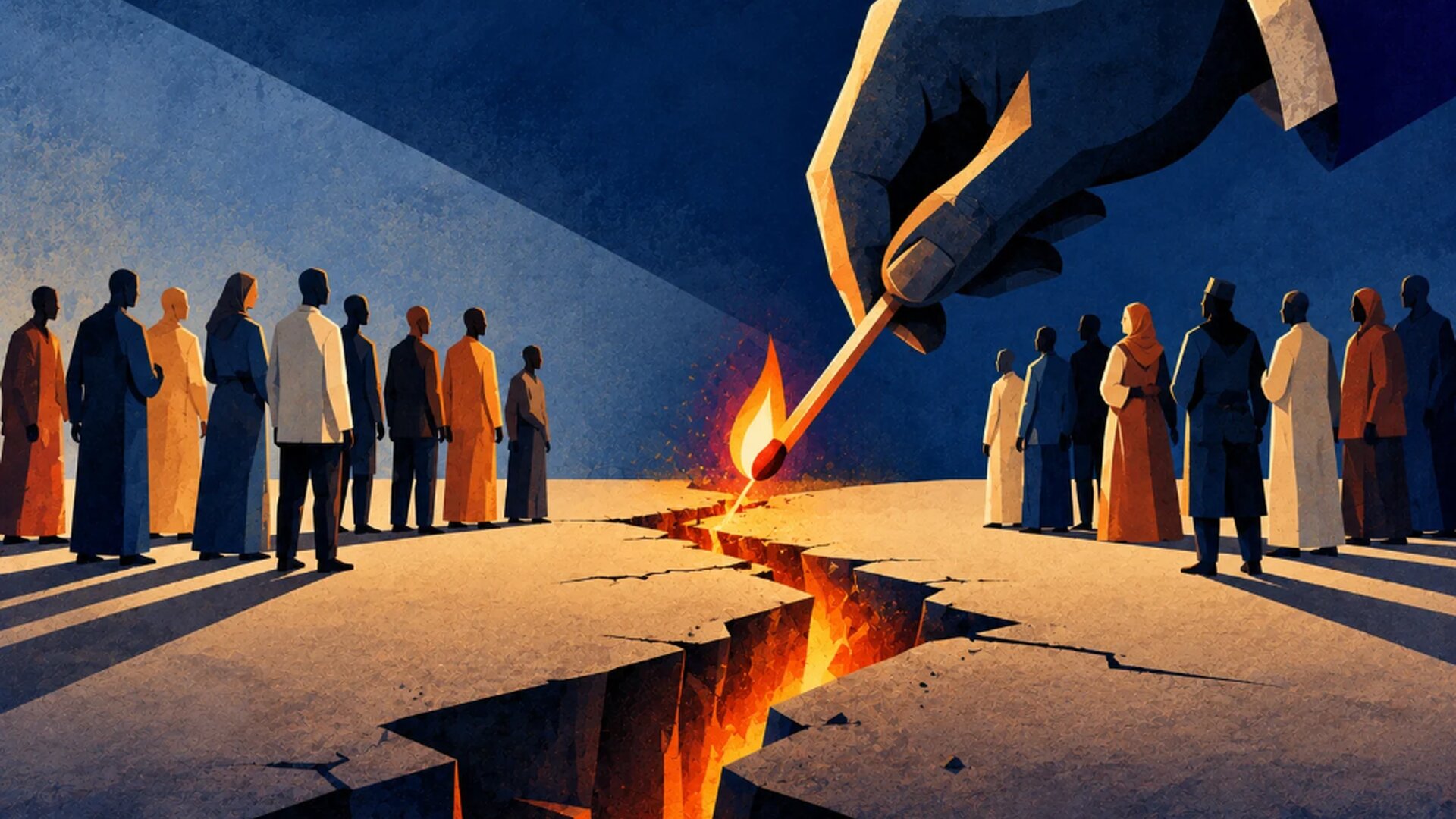
The greatest danger is that once these fault lines are deliberately activated, they become difficult to control. Politicians may light the fire of hate for electoral advantage, but it is ordinary Nigerians who are often left to live with the consequences of the flames.
In Nigeria, hate speech functions not merely as a precursor to violence, but as a mechanism for sustaining a cycle of violence, creating an “us versus them” narrative, legitimising retaliation, and making civilians who share an identity with the alleged perpetrator legitimate targets. A study of Nigeria's Fourth Republic by Okolie U.C and Okoedion E.G, demonstrates how hate speech becomes particularly dangerous when it intersects with existing grievances, identity divisions, political competition, and misinformation. It transforms an opponent, neighbour or community from a political competitor into an existential threat or legitimate target.
The Digital Battlefield
Technology has fundamentally changed the speed, scale and reach with which political narratives can be created and circulated. Social media platforms can strengthen democratic participation by giving citizens access to information and enabling them to engage directly with political actors. However, the same platforms can become powerful accelerators of misinformation, divisive rhetoric and hate. A provocative message that once took days to circulate can now reach millions of people within minutes, often without verification or accountability.
The greater danger is that ordinary citizens can unknowingly become distributors of political propaganda. Misinformation, disinformation and hate speech often rely on credible sources to amplify their reach. A sensational video, fabricated quotation, misleading photograph or emotionally charged message may appear credible simply because it was shared by a mentor, friend, family member or trusted community group. Each forward, repost or comment can amplify the narrative and give it an appearance of legitimacy.
In the digital age, political propaganda no longer requires an organised army of propagandists; it can recruit ordinary citizens as its unwitting foot soldiers. As 2027 approaches, responsible citizenship must therefore include not only the right to speak and share, but the discipline to pause, verify and think before amplifying content that could deepen Nigeria's divisions.
Nigerians must learn to question narratives that provoke anger, fear or hatred, even when they appear to favour our preferred candidate or political group. Political loyalty should never require the suspension of judgment, and defending “our own” should never mean defending what is harmful to the nation. A politician cannot weaponize hate effectively if citizens refuse to carry the weapon.
2027 Must Not Become a Contest of Who Can Divide Nigerians the Most
The 2027 election must not become a competition over who can most effectively exploit Nigeria’s fault lines. When fear, ethnic suspicion, religious hostility and regional resentment become campaign tools, political competition ceases to be a contest of ideas. It becomes a contest of identities, and democracy becomes the casualty.
Politicians should debate policies, defend their records, present credible alternatives, challenge their opponents and mobilise voters. They should convince Nigerians why their vision as encapsulated in their manifesto deserves support, rather than manufacture enemies whom Nigerians are encouraged to fear or despise. Do not turn Nigerians against Nigerians merely to win an election.
Becoming Responsible Political Citizens
Responsible citizenship in an election is not merely about voting; it is also about what we believe, what we share and what we allow ourselves to be mobilised to do. As political messaging intensifies ahead of 2027, Nigerians must adopt a simple discipline to interrogate political content before amplifying it by asking the basic questions of: Who created the content? What evidence supports it? Is it deliberately designed to make me angry or afraid? Could sharing it place another individual or community at risk?
More importantly, Nigerians must be willing to challenge hate and divisive rhetoric within their own political camps, rather than condemn it only when it comes from opponents. Democracy cannot survive on selective principles where behaviour is unacceptable when “their side” does it but justified when “our side” does it.
The Election Will End; We Will Still Be Nigerians
Elections are temporary contests for political power, but the relationships that hold a country together must endure long after the ballots have been counted. Politicians will contest, parties will win and lose, governments will change, and those who trade insults on the campaign trail today may find themselves working together tomorrow. Moreso, ordinary Nigerians will remain neighbours, colleagues, friends and fellow citizens, regardless of who occupies the seat of power.
Nigeria has already witnessed what principled political leadership can achieve in moments of intense electoral uncertainty. In 2015, then-President Goodluck Ebele Jonathan, seeking re-election as an incumbent, conceded defeat to Muhammadu Buhari before the final results were fully announced, guided by his conviction that “my ambition is not worth the blood of any Nigerian.” That was more than a concession. It was a powerful demonstration that the preservation of lives, national unity and democratic stability must ultimately take precedence over personal political ambition. As Nigeria approaches 2027, that conviction offers an enduring lesson: is any political victory worth leaving behind a society that is more divided, distrustful and hostile to itself? The idea that all is fair in politics must be collectively resisted.
The 2027 election will eventually end. Politicians will return to their calculations, parties will regroup, and another political season will emerge. Nigerians will continue to share the same communities, markets, schools, workplaces and neighbourhoods. A temporary contest for political power must not be allowed to create permanent divisions among the people who must live with its consequences.
About the Author
Edosa Oviawe is a policy and development consultant with experience in governance, public policy, institutional reform, human rights, and democratic accountability.