
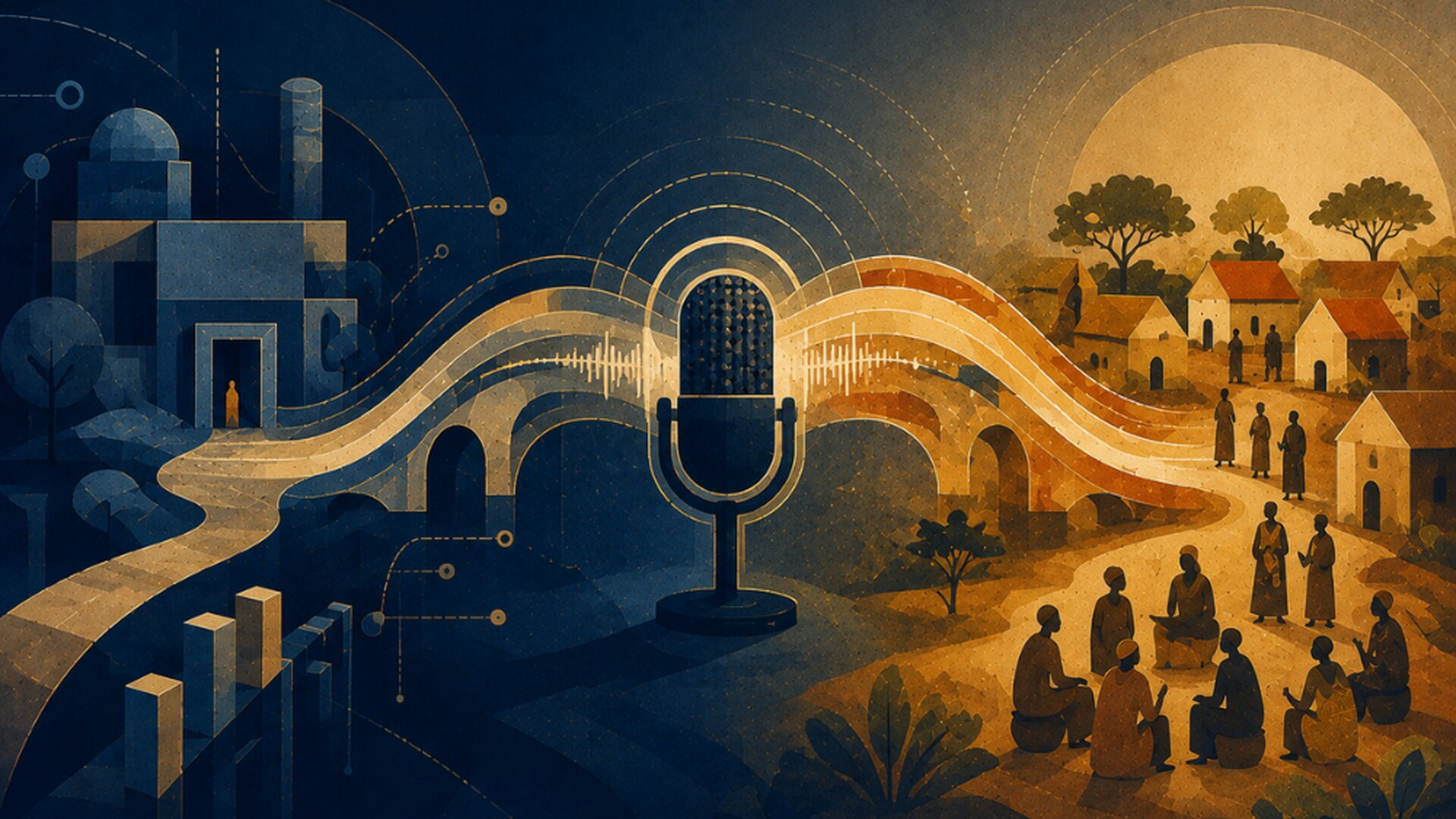
Making Operation Safe Corridor Speak Local: A Vernacular Radio Model for Sustainable Reintegration
Operation Safe Corridor (OSC) has become Nigeria’s flagship non-kinetic response to violent extremism, combining deradicalisation, rehabilitation, and reintegration for former Boko Haram associates. Public debate, however, has largely focused on security, legal safeguards, and rehabilitation processes, while paying comparatively little attention to the communication environment to which participants eventually return. Yet reintegration succeeds only when communities believe the process is transparent, accountable, and compatible with their own security and lived experience.
Across Northeast Nigeria, communities continue to ask legitimate questions. How are participants screened? What rehabilitation do they receive? What protections exist if someone relapses into violence? How are victims recognised alongside former combatants? These concerns cannot be answered through policy documents, press statements, or occasional government briefings. They require continuous engagement through trusted communication in languages people speak, understand, and identify as their own.
This communication gap presents one of Operation Safe Corridor’s greatest institutional challenges. Public confidence cannot be legislated into existence. It must be earned through sustained, transparent, and culturally credible engagement. Unless communities trust the reintegration process, misinformation, rumour, and extremist narratives will continue competing with official explanations, weakening confidence in an otherwise important peacebuilding initiative.
Why vernacular radio matters
Vernacular radio provides Operation Safe Corridor with an opportunity to bridge this trust deficit. Throughout Northeast Nigeria, radio remains the most accessible public medium, particularly among rural populations and internally displaced persons. It crosses literacy barriers, reaches remote settlements, and communicates through languages that communities instinctively trust. Research by Translators Without Borders demonstrates the continuing importance of local-language audio communication for humanitarian engagement in conflict-affected communities.
Its significance extends beyond accessibility. Boko Haram and its splinter groups invested heavily in controlling local narratives because they understood that communication influences legitimacy long before violence shapes territory. Countering violent extremism therefore requires more than successful military operations or rehabilitation programs. It requires reclaiming the same communication space through trusted local voices who can explain public policy, correct misinformation, and encourage informed dialogue.
My earlier policy research argued that vernacular radio counter-narratives strengthen socio-communal culture, sustainable peacebuilding, and post-conflict resilience because they communicate within familiar linguistic and cultural contexts rather than through distant institutional language. That proposition has become increasingly relevant as Operation Safe Corridor seeks not merely to rehabilitate individuals but also to rebuild confidence between government and communities.
Stations such as Dandal Kura and Radio Ndarason already demonstrate how trusted vernacular broadcasting can counter extremist propaganda, encourage public dialogue, and strengthen community resilience. Broadcasting in Kanuri, Hausa, Shuwa Arabic, Fulfulde, and other local languages, they explain sensitive issues through familiar cultural frames while allowing listeners to question, challenge, and participate in public discussion. Operation Safe Corridor should therefore regard vernacular radio not simply as another publicity platform but as an essential component of its reintegration architecture.
From broadcasting to institutional communication
The immediate challenge for Operation Safe Corridor is sustainability. Peace messaging often succeeds while donor funding lasts but fades once projects conclude. The Centre for Democracy and Development (CDD-West Africa), through its Sulhu Alheri initiative has demonstrated the importance of locally grounded peace communication, through partnerships with vernacular broadcasters to promote dialogue and social cohesion. Such initiatives provide important lessons, yet reintegration requires communication that outlives project cycles. Public confidence cannot depend upon temporary campaigns.
Operation Safe Corridor should therefore establish a permanent communication framework anchored in trusted vernacular radio. The process should begin with a communication audit across Borno, Yobe, Adamawa, and neighbouring communities to identify dominant languages, trusted stations, listening patterns, prevailing misconceptions, and influential broadcasters. Understanding how communities receive information is as important as understanding how former combatants complete rehabilitation.
The next step is institutionalisation. Rather than purchasing occasional airtime, OSC should support dedicated weekly programs explaining reintegration, answering community questions, and discussing practical concerns surrounding returnees. Programs should include religious and traditional leaders, psychologists, security practitioners, civil society representatives, survivors, and communities already receiving former combatants. Production should remain locally driven. Messages written centrally and translated afterward rarely inspire the same confidence as discussions shaped by local presenters who understand community realities.
Fighting rumours with trusted voices
Rumours remain one of reintegration’s greatest obstacles. Questions concerning screening procedures, victim support, financial assistance, and post-release monitoring frequently circulate through informal networks long before official responses appear. When unanswered, misinformation weakens confidence and reinforces suspicion.
Vernacular radio provides an effective mechanism for responding before rumours become accepted truths. Participating stations should maintain telephone lines, SMS platforms, and WhatsApp channels through which listeners submit questions anonymously in their preferred languages. Each broadcast should address the most persistent misconceptions using verified information while acknowledging legitimate public concerns. Transparency strengthens confidence far more effectively than silence.
Equally important is selecting credible communicators. Public trust depends not only upon government officials but also upon familiar voices whose integrity communities already recognise. Experienced broadcasters, respected religious scholars, traditional leaders, survivor advocates, conflict-sensitive journalists, and humanitarian practitioners can explain reintegration in ways that bridge institutional policy and community experience. Their credibility enables difficult conversations that official spokespersons alone often cannot achieve.
Radio should also complement, rather than replace, community dialogue. Listening clubs, peace committees, and town-hall discussions can extend conversations beyond the studio, allowing residents to debate issues collectively while providing OSC with continuous feedback. Reintegration becomes stronger when communication moves in both directions.
Measuring trust, not airtime
Communication should be evaluated according to public confidence rather than broadcasting volume. Indicators should include listener participation, languages reached, recurring misconceptions corrected, community attitudes toward returnees, and independent surveys measuring trust in reintegration. Such evidence would allow OSC to refine messaging continuously instead of assuming communication is effective simply because programs are transmitted.
Reintegration ultimately succeeds when communities become partners rather than spectators. Helping Operation Safe Corridor speak local is therefore not merely a communication strategy. It is the missing institutional bridge between successful rehabilitation and genuine community acceptance, strengthening legitimacy, reducing misinformation, and advancing durable peace across Northeast Nigeria.
Embedding communication within reintegration policy
Operation Safe Corridor should recognize communication as a core reintegration function rather than a supporting activity. Communication planning ought to begin before participants leave rehabilitation facilities and continue throughout community reintegration. Consistent engagement enables communities to understand programme objectives, appreciate screening procedures, and distinguish verified information from speculation. This institutional approach reduces uncertainty while strengthening confidence in reintegration outcomes.
The communication framework should integrate vernacular radio with complementary local structures, including traditional institutions, religious organisations, community peace committees, and civil society groups. These actors already possess established relationships with residents and can reinforce messages introduced through radio discussions. Coordinated communication across multiple trusted platforms increases message consistency and limits opportunities for misinformation to flourish.
International experience demonstrates that sustainable reintegration depends upon transparent public engagement alongside rehabilitation interventions. The United Nations Development Programme emphasises that community participation, locally owned dialogue, and trusted communication strengthen social cohesion in fragile settings. Likewise, the International Organisation for Migration highlights the importance of community-based communication in promoting acceptance, reducing stigma, and supporting durable reintegration.
Operation Safe Corridor therefore requires an enduring communication strategy supported by institutional commitment rather than temporary campaigns. Establishing dedicated funding, regular audience research, broadcaster training, and independent evaluation would ensure that communication remains responsive to changing community concerns. Treating vernacular radio as permanent reintegration infrastructure rather than occasional publicity would strengthen programme legitimacy, encourage informed public participation, and reinforce the long-term credibility of Nigeria’s non-kinetic response to violent extremism.
ABOUT THE AUTHOR
Amina Adam Kolo holds a B.Sc. in Mass Communication and is a career civil servant at the Nutrition Unit of Damaturu Primary Health Care Centre under the Yobe State Ministry of Health.